Showing posts with label Monday Morning Blues. Show all posts
Showing posts with label Monday Morning Blues. Show all posts
Monday, June 9, 2008
Yin and Yang of Managua Parties
Tale of two parties....Saturday night's party was great. What a treat, spending the evening with some of my closest friends in Managua. Sunday afternoon was not so great, sitting around like a hungover lizard, listening to drivel from a bunch of Nica freeloaders. More about that later....
But first, let me say that Saturday night's party was a fitting end to my party circuit in this hazy Central American capital. In all, about 40-50 folks from the Embassy community showed up, including a couple friends from the Manzanita mafia (a Spanish-Nica couple that we've come to know through our son's preschool). Let's see, I drank keg beer, ate chocolate cake, did shots of tequila, even played wiffle ball with some Americans and a Swedish couple (ahem, I even hit one over the house, which, in my book, is a homerun!). I let my hair down, so to speak....which to my good fortune, is all possible when you live 3 houses away from the gala locale....by the way, kudos and special thanks to the hostess that made all this possible.
Perhaps as a sign of how good a time I was having, I have no idea when I got home. All I know, is that I drained every last second out of the fun. As they say in sports, 'I left it all on the field'....
On the other hand, yesterday's 'despidida' was a different story. As some of you may know, I take tennis lessons here in Manangua. My teacher, the patriarch of Managua's most renowned tennis family, had been inviting me for some time to partake in a weekend 'lechon', or a Nica pig roast. One of his cousins owns a restaurant just outside of town, and knowing that my time is short here, I finally relented. It's not that I didn't want to go, it just seems that there is always something else going on.
So, around 10am, I show up with my tennis prof, at which point I'm really hungover from the previous evening's festivities. So, what do you think I do.....ahem, have a beer! Good grief!! So it went.... I spent the next 3-4 hours shooting the breeze with Jorge and a menage of Nica troubadours, ranging from close cousins, to just plain thirsty acquaintances. Around 2 pm, I decided that I'd had enough. I don't know if it was one guy 'offering' one of his female teenage cousins to me that did it, or was it the proclamation that 'Americans are narrow-minded'. Maybe it was the banter about American politics, revealing an ignorance that borders on a time in America when folks sat around the general store and waxed poetic about things they had no knowledge about whatsoever. I mean, where do you begin? But after all, I'd been invited for this farewell as a send-off, and I'd 'done my time' out of respect.
But, I'm afraid the Sunday Nica brunch left a bitter taste in my mouth. You see, when it was time to go, we asked for the check, which amounted to my prof's cousin bringing me the bill of over $60 and everyone sitting there, staring at me. Unfortunately, I didn't have that kind of cash on me. In fact, I'm lucky I brought much at all. So, I paid what I had, leaving me penniless, fuming, and ..... I still had to give my tennis prof a ride back into town. Not only that, I was letting half the restaurant use my cell phone, as they were all either too thirsty or poor to have any minutes on their phones.
I don't mind paying my share. In fact, in my time in Nicaragua, I've grown accustomed to the idea that, I'm a rich American in their eyes and am made of money. I'm the freaking money tree, nothing more, nothing less. That's the sad reality that prevents most anyone from making any real, genuine friendships in this country. I should've known better. Not only did I spend my Sunday afternoon away from my family, I wasted money on a bunch of freeloading drunks under the guise of 'oh, we're going to miss you....you're different from all the other Americans' nonsense. I can speak the local dialect, carry on conversations for hours on end.....Heck, I can even take my shirt off and play with my bellybutton like some deadbeat Nica drifter. But, at the end of the day, I just another foreigner to leech off of. Sadly, I see this as a metaphor for the greater struggle that goes on in this country.
I feel for the good, honest, hard-working people of this country. The ones like our nanny, a person I have the utmost respect for. Unfortunately, they are almost invisible, amidst the vast majority of those that I have come into contact with in Managua. Every day, I encounter those that cannot see me as an individual, only as someone to dupe and take advantage of. I'd rather be just ripped off in Huembes, than to know someone for a year or so, thinking that perhaps you are more to them than a pathetic handout, only to be disappointed yet again. It's like after getting punched in the gut so many times, you stupidly put your guard down once more, only to be wailed on one last time. Adios Managua!
But first, let me say that Saturday night's party was a fitting end to my party circuit in this hazy Central American capital. In all, about 40-50 folks from the Embassy community showed up, including a couple friends from the Manzanita mafia (a Spanish-Nica couple that we've come to know through our son's preschool). Let's see, I drank keg beer, ate chocolate cake, did shots of tequila, even played wiffle ball with some Americans and a Swedish couple (ahem, I even hit one over the house, which, in my book, is a homerun!). I let my hair down, so to speak....which to my good fortune, is all possible when you live 3 houses away from the gala locale....by the way, kudos and special thanks to the hostess that made all this possible.
Perhaps as a sign of how good a time I was having, I have no idea when I got home. All I know, is that I drained every last second out of the fun. As they say in sports, 'I left it all on the field'....
On the other hand, yesterday's 'despidida' was a different story. As some of you may know, I take tennis lessons here in Manangua. My teacher, the patriarch of Managua's most renowned tennis family, had been inviting me for some time to partake in a weekend 'lechon', or a Nica pig roast. One of his cousins owns a restaurant just outside of town, and knowing that my time is short here, I finally relented. It's not that I didn't want to go, it just seems that there is always something else going on.
So, around 10am, I show up with my tennis prof, at which point I'm really hungover from the previous evening's festivities. So, what do you think I do.....ahem, have a beer! Good grief!! So it went.... I spent the next 3-4 hours shooting the breeze with Jorge and a menage of Nica troubadours, ranging from close cousins, to just plain thirsty acquaintances. Around 2 pm, I decided that I'd had enough. I don't know if it was one guy 'offering' one of his female teenage cousins to me that did it, or was it the proclamation that 'Americans are narrow-minded'. Maybe it was the banter about American politics, revealing an ignorance that borders on a time in America when folks sat around the general store and waxed poetic about things they had no knowledge about whatsoever. I mean, where do you begin? But after all, I'd been invited for this farewell as a send-off, and I'd 'done my time' out of respect.
But, I'm afraid the Sunday Nica brunch left a bitter taste in my mouth. You see, when it was time to go, we asked for the check, which amounted to my prof's cousin bringing me the bill of over $60 and everyone sitting there, staring at me. Unfortunately, I didn't have that kind of cash on me. In fact, I'm lucky I brought much at all. So, I paid what I had, leaving me penniless, fuming, and ..... I still had to give my tennis prof a ride back into town. Not only that, I was letting half the restaurant use my cell phone, as they were all either too thirsty or poor to have any minutes on their phones.
I don't mind paying my share. In fact, in my time in Nicaragua, I've grown accustomed to the idea that, I'm a rich American in their eyes and am made of money. I'm the freaking money tree, nothing more, nothing less. That's the sad reality that prevents most anyone from making any real, genuine friendships in this country. I should've known better. Not only did I spend my Sunday afternoon away from my family, I wasted money on a bunch of freeloading drunks under the guise of 'oh, we're going to miss you....you're different from all the other Americans' nonsense. I can speak the local dialect, carry on conversations for hours on end.....Heck, I can even take my shirt off and play with my bellybutton like some deadbeat Nica drifter. But, at the end of the day, I just another foreigner to leech off of. Sadly, I see this as a metaphor for the greater struggle that goes on in this country.
I feel for the good, honest, hard-working people of this country. The ones like our nanny, a person I have the utmost respect for. Unfortunately, they are almost invisible, amidst the vast majority of those that I have come into contact with in Managua. Every day, I encounter those that cannot see me as an individual, only as someone to dupe and take advantage of. I'd rather be just ripped off in Huembes, than to know someone for a year or so, thinking that perhaps you are more to them than a pathetic handout, only to be disappointed yet again. It's like after getting punched in the gut so many times, you stupidly put your guard down once more, only to be wailed on one last time. Adios Managua!
Monday, March 17, 2008
Avalon Blues - 100th Post
To commemorate my 100th post on my blog, here's a little Mississippi John Hurt....Avalon Blues.......Hope you like it.
Wednesday, October 10, 2007
YouTube Favorites on Guitar
Another Brick in the Wall by Naudo. This guy makes me want to go out and trade in all my guitars for that classical guitar he has....In fact, I have to go practice right this very minute.
Cincinnati Flow Rag #2 by Gustavo. Plays Fingerpicking Blues all the way from Spain, with a sweet sounding Martin and Blueridge....among countless others in his collection. Gustavo's keeping the tradition alive...and he's a fellow Piedmont Blues enthusiast!
Baby It Must Be Love by Guitar Dan. You know, this guy has the balls to sing Blind Willie McTell, while playing very good facsimiles....Very nice. I love his tuned down Stella 12-string.
Beans by BanjoChris. You should see him play the banjo! Chris's vocal delivery is au-thentic. He is juke-joint worthy, a serious student of the Blues. I wish he'd post more often.
I implore you to check out these guys' playing the guitar. You'll be glad you did.
Wednesday, October 3, 2007
No Time Left For Me...
This is crazy....I've had zero time lately for this blog. For the 1 or 2 people that check in on it, my apologies.....
I have a stack of Netflix movies waiting to be watched, including Butch Cassidy and the Sundance Kid and Some Like It Hot. With any luck, I'll get around to posting a review, as well as a long overdue Monday Morning Blues entry.
Take care everyone....
I have a stack of Netflix movies waiting to be watched, including Butch Cassidy and the Sundance Kid and Some Like It Hot. With any luck, I'll get around to posting a review, as well as a long overdue Monday Morning Blues entry.
Take care everyone....
Wednesday, August 15, 2007
Monday Morning Blues on a Wednesday

Two more weeks before our newest addition to the family...Prospective parenthood, work, and other obligations have limited my blogness.
Folks, I can't get enough Blues. This week, after a long hiatus, I want to introduce you to a lesser known legend of yesteryear, Cryin' Sam Collins. Collins, one of the first recorded slide players, hailed from Louisiana in 1887, performing mostly right across the border in McComb, Mississippi in the early 1920s, recording some sides for Gennett Records later on.
A lesser known 'Delta' player, Crying Sam is similar in voice to Tommy Johnson, yet he doesn't have the same haunting quality, or feel, in the vocal delivery. Indeed, he is a cross between Johnson and Blind Lemon Jefferson....Delta-Lite, if you will. His most famous side was perhaps, Jailhouse Blues, a well-sung, well-played classic blues. However, this early Delta bluesman actually recorded Midnight Special Blues before Leadbelly. Although I prefer Mr. Ledbetter's, it's interesting to hear an early variation of the song. Not unlike Leadbelly, Collins dabbles in different sub-styles within the blues, playing a variation of the oft-recorded Shake That Thing, here it's Do That Thing, a dance piece that makes you smell the pine wood and corn liquor on a Saturday night.
In all, I'd recommend Collins for a change of pace from the usual suspects....the oft-mentioned greats, such as Robert Johnson, Leadbelly, Skip James, Furry Lewis, and company. Check out Jailhouse Blues on the Yazoo Record reissue for a great collection of his material
Tuesday, July 24, 2007
Monday Morning Blues On Tuesday
 Well, as you may have gathered, I've been a bit busy lately. I haven't posted a Monday Morning Blues review in quite awhile, dedicating much of my time to my other blog.
 Anyway, I offer you a more modern blues album/artist this week, Little Walter.
Best known as Muddy Waters' harmonica player, Marion Walter Jacobs was a blues innovator of the later generations of early bluesmen that made the Chicago sound famous. Although I'm not a huge fan of this sub-genre, I have to give credit where credit is due. Little Walter can flat out play the harmonica. Just have a little listen to arguably his most famous tune, Juke.
Well, if jukin' and jivin' with the mouth harp is your thing, check out Little Walter. You can almost smell the musky air and the see the neon of Chi-town's blues joints. Me.....well, I'll be down the road a piece on ole Highway 61.
Monday, June 4, 2007
Monday Morning Blues # 9

(playing a little blues between cooking up some pulled pork sandwiches)
Hungry? Good, because I'm offering you some Barbecue........Barbecue Bob, that is. Robert Hicks, aka Barbecue Bob, was born in Walton County (Walnut Grove), Georgia in 1902. Famous for entertaining guests at Tidwell's Restaurant in the 1920s, Bob earned a great nickname, as well as a reputation for playing some of the finest blues in the Atlanta area. Bob's brother, 'Laughing' Charley Lincoln recorded some records as well, but never achieved the amount of notoriety, in life nor death. Both men probably learned their craft from the mother of Curly Weaver (Savannah 'Dip' Weaver) in Newton county in the late teens and early 20s, before heading to Atlanta.
Although I'm partial to McTell (see Monday Morning Blues #3 here) when it comes to the Atlanta sound, there is really no one that sounds like BBQ Bob. Like fellow Georgian McTell, Bob brandished a Stella 12-string, yet while McTell, and others (notably Leadbelly) utilized heavier strings, tuned down from concert pitch, Mr. Hicks went lighter. His tuning/guitar setup is truly mysterious, as some think he removed the 2 bass strings on the 5th and 6th course, to get the violent bass strum that harkens to the Delta sound, yet is altogether different.
10 or 12 strings, it's not really important. What is important is the unique rhythm and sound that Bob gets out of his Stella. Listen to 'She Shook Her Gin', basically his take on 'Shake That Thing', complete with his trademark guitar thump turnaround. My personal favorite though, has to be the self effacing ode, 'Barbecue Blues', a story of unrequited love from a man that 'ain't good looking, teeth don't shine like pearls' to his 'brown' that done him wrong. His vocal delivery is particularly interesting and captivates the listener. A prime example of this is his clever use of metaphor in the 'Black Skunk Blues'. Listen as he explains the dangers of interracial, or 'mixed' dating in 1920s Atlanta.
Alas, fame was short-lived for the culinary bluesman from Newton county, as he contracted pneumonia brought on by influenza, dying shortly thereafter in 1931 before his 30th birthday. Fortunately for his music, it lives on today in his well-preserved sides, 65 of 68 have been preserved and can be heard for the most part on 'Chocolate to the Bone' and 'The Essential Barbecue Bob'. I gravitate back to his music for many reasons, but above all, for his expressive voice and unique 12 string setup/playing. It doesn't hurt that he's a fellow Georgian.....I guess I'm just sittin' here in Managua this morning with 'Georgia on my mind'
Monday, May 21, 2007
Monday Morning Blues #8
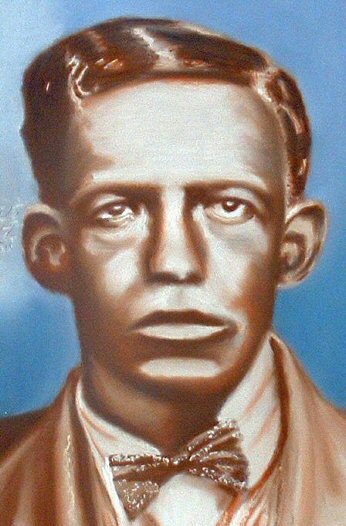
Well...the rain fell down here in Managua. The rainy season has officially begun. What better 'rainy day' music to listen to than the blues. Luckily for me, I have a few selections to choose from. Since the downpours are often violent, and flooding occurs, there is no other choice but to listen to the great Delta bluesman, Charley Patton, singing about the 'high water', the Mississippi flood of 1927, and hard living (plenty of that here in Nicaragua!).
Patton was one of the blues pioneers, a man that, along with Blind Lemon Jefferson and Leadbelly, became an inspiration to generations of bluesmen, and subsequent musicians in general. His hard-hitting style of slide guitar reverberates today as loudly as it did 80 years ago. Simply put, he was one of the first legends of the blues, a Delta 'star', if you will.
Born in Hinds county, Mississippi in 1891, Patton and his family soon moved to the famous Dockery Plantation, where Howlin' Wolf, John Lee Hooker, and Robert Johnson later followed in his footsteps. He, along with Son House, Tommy Johnson, and others, more or less created the Delta blues buzz of the early 20th century. Playing behind his head, between his knees, with a loud, gravelly voice, Patton blazed a distinct trail for future bluesmen. Although small in stature, Patton is a giant in the genre.
I could elaborate further, but I feel that famed cartoonist R.Crumb sums it up best, describing Patton's eclectic life in a comic book style motif seen here. Patton lived the typical 'bluesman' life, drinking heavily, chasing women, entertaining crowds on Saturday night, and eeking by the rest of the week. Hard times, hard livin'...
For the best of the hard driving Delta blues, and insight into the Delta region in the early 20th century, check out the extensive box set, Screamin' & Hollerin' the Blues. (available for a limited time here) Patton truly was the 'Father of the Delta Blues'. After listening, you may find yourself thirsty for some of that good ole bootleg whiskey....then, you'll hear the crickets chirping, hoot owl singing, and the jubilation and misery of the Delta from a faraway time.
Monday, May 14, 2007
Monday Morning Blues.....It's Morning Somewhere

Well, this is a little late for Monday Morning Blues, but late is better than never....This week, I'm exploring the sound that came out of 'my neck of the woods', ......East Coast Blues 1927-1933. East Coast Blues, or the Piedmont Blues, was just as important as its more famous musical cousin, the Delta Blues, but remains on the periphery of mainstream acceptance as a shaping force of the American musical lexicon. In contrast to the hard-hitting monotonic tales of woe and misery on the Mississippi Delta, the Piedmont sound, at least musically speaking, tells a much happier tale. This is piano music.....'Raggin' the Blues'. One of the most prolific, if not most talented, bluesmen (Blind Gary Davis) of the early 20th century once mused that he'd play piano, but he couldn't carry one on his back....
So, you may have heard of some of the more famous bluesmen of this geographical and musical arena....in addition to Blind Gary Davis, there was Blind Willie McTell, Blind Blake, and Blind Boy Fuller (alas...they weren't all blind I promise!). All four had extensive catalogs, were well chronicled, and much revered, on a layer of notoriety just a tad beneath the more famous Delta musicians, such as Son House and Robert Johnson. All one needs to do is listen to Davis or McTell a couple of times, before you start wondering what else there is out there that might be lurking underneath the surface. 'East Coast Blues 1927-1933' explores some of the less obscure artists that 'rag the blues' with their Stella guitars, zoot suits, and bootleg whiskey.
Getting back to Blind Gary Davis, a man that experienced the 1920s Race Record boom, the subsequent Great Depression, and the Blues Revival of the 1960s, becoming a bridge, of sorts, to burgeoning musicians....an inspiration and musical guide. He was once asked who he thought was the best bluesman he knew of, to which he replied without hesitation.....Willie Walker. Walker, blind at birth, died at only 37 years of age in 1933, was only rediscovered in the 1970s, yet still remains obscure to the modern listener. Here, we're treated to 2 of the 4 sides the Greenville, South Carolina native recorded for Columbia Records in 1930, 'South Carolina Rag' and 'Dupree Blues'. Davis knew what he was talking about. As I listen to the former, I openly wonder how many unknown legends there are/were.......Life's a mystery I say....
Additionally, there is Bo Weavil Jackson's 'Pistol Blues', a musical hybrid of the more popular 'Crow Jane', and Chicken Wilson & Skeeter Hinton playing a rollicking 'Myrtle Avenue Stomp', complete with washboard, spoons, and a rapid delivery guitar style that makes you want to do a jig right in front of your computer. William Moore shows up on several tracks, none better than the fitting 'Raggin' The Blues', where he captures the essence of a bygone era of bathtub gin and the cultural transformation of urban America.
If you think the Blues is only about the sound of Robert Johnson, Son House, and the Delta.....or it is best found in the Blues bars of Chicago and the feathered cap of Stevie Ray Vaughan, please do yourself a favor and pick up some Piedmont Blues. Alas, in Martin Scorcese's much heralded Blues documentary, he lists a map showing 'significant' blues regions and makes no mention of the Piedmont region!!!!! Personally, I think there's more soul and expression in the 'D.C. Rag' kazoo solo by Chicken Wilson & Skeeter Hinton than on all of the electric blues found today. Don't take it from me though, go out and listen to some Blind Willie McTell and Gary Davis, and you too, will soon be clamoring to find out about these more obscure masters on collections such as this one.
Monday, May 7, 2007
Monday Morning Blues Returns

Well....this was a rough weekend...I've had a fever, I ache all over, and have a piercing headache. What better circumstances to write about some blues! First off, I'd like to refer you to a nice website that I found, a vast reservoir of Blues, Ragtime, Country, Carribean, and Western Swing music of yesteryear.....Impressive!
I digress....Today, I'd like to discuss the great Huddie Ledbetter, better known as Leadbelly. Some of you already know about Leadbelly, and others still, know how much I admire the man and his music. At any rate, I'm going to discuss him in a little more detail today, offering some listening suggestions and observations.
Huddie Ledbetter was born in the backwater border area between Louisiana and Texas and emerged to become one of the true icons of American music, penning classics such as Goodnight Irene, Midnight Special, and many others. His songs were a reflection of America. He sang topical songs, about Boll Weevils, the Titanic, racism in Washington D.C., Hitler. He sang children's songs, work songs, union songs. You name it, Leadbelly had a song for it.
He was equally known for his booming voice and distinct 12-string guitar, which he named 'Stella' (named after the guitar manufacturer of parlor guitars, made famous by many bluesmen of the early 20th century). Tuned down to a much lower pitch, 'Stella' rung out and, coupled with his loud tenor voice, he produced a sound that pre-dated microphones. Whether it was at a 'sukey jumps', children's show, union rally, or in the fields, Leadbelly had a repertoire for all.
Using a plastic thumbpick and metal fingerpick, he played tunes for Alan Lomax's recording device (essentially the first portable recording device) and traveled the country as sort of a sideshow from a bygone era of minstrels and slave ships. Popular artists, such as Kurt Cobain and Bob Dylan, have been inspired greatly by Leadbelly. It was said that the former cited his 'Last Sessions' as his biggest musical inspiration. (Cobain had great taste by the way!)
A twice convicted murderer, Leadbelly famously sang his way out of prison, after recording a song for Louisiana Governor Pat Neff. Living under aliases and always seemingly in trouble with the law, Leadbelly amazingly escaped the incarceration and Jim Crow, to perform into his twilight years, linking himself with the left-wing establishment, along with Woody Guthrie, Sonny Terry, Brownie McGhee, Cisco Houston, and others. In a twist of fate, Leadbelly never lived to see his star shine on a wide-scale level, as his signature hit, Goodnight Irene, reached the top of the American charts, performed by Pete Seeger and the Weavers, mere months after he succumbed to Lou Gehrig's disease in 1949.
Every American song you hear on the radio has a little bit of Leadbelly in it. I suggest you check out Where Did You Sleep Last Night? as an introductory course into the man's music. Afterwards, you will be mystified and fascinated enough to delve into the rest. I guarantee....
Monday, April 16, 2007
Monday Morning Blues # 5
Well, I really didn't have time to do a blues review this morning, so I'm going to offer some more of my own music I suppose. Tomorrow or Wednesday....whichever comes first, there will be a blues review. But, for now, here are three works-in-progress for me. Freight Train, Hard Times In New York Town, and Cocaine Blues.......
Monday, April 9, 2007
Monday Morning Blues # 4
Well, another stormy Monday.....not quite. It hasn't rained in Managua in all of 2007. Can you imagine?! I thought this place would be overrun with flora and fauna. Instead, half of the year resembles the dust bowl of the Oklahoma plains. At any rate, it's time for another installment of Monday blues...and boy, do I have 'em.
It's a little lonely around here, as we've enjoyed some great company over the last month. So, a little blues is fitting for this quiet Monday morning. What better place to look than Mississippi John Hurt. I have quite a few of his recordings, all of them great. From his original 1928 Okeh recordings, to his warm 1964 Oberlin College performance, you really can't go wrong. So, it's probably fitting that you first check out Complete Studio Recordings (3 cds), a collection from the 1960s folk and blues revival, which saw the 're-discovery' of John Hurt's music.
John Hurt's story is compelling. Born in Teoc, Mississippi in 1893, he learned the guitar at the age of 9, with his mother eventually buying him a guitar for $1.50. He claimed that the sound of his very own guitar was the 'sweetest in the world'. His style is distinct.....a sweet, mellow voice, parroting the man himself, coupled with a relaxed, yet complex syncopated guitar style, contrasting the hard-edged 'delta' sound of fellow Mississippi contemporaries. Hurt sings blues, but he is a hybrid, not unlike Leadbelly, able to weave in and out of the American songbook with ease. At any rate, throughout his early life, he partnered with local musicians, playing dances, parties and so forth, toggling between the rough, hard-edged life of a sharecropper and that of local entertainer. By word of mouth, representatives of the short-lived Okeh label, invited him to record two sessions, one in Memphis and the other in New York City. However, both were considered failures, and the label, as well as Hurt's music, faded into obscurity in the subsequent years of the Great Depression.
That all changed though. In 1963, upon studying the lyrics of 'Avalon', an ode to Hurt's hometown, musicologist and blues enthusiast, Tom Haskins sent a telegram to John. Incredibly, Hurt soon traveled to New York and Washington, playing for responsive crowds. His performance at the Newport Folk Festival in 1963 spawned his rise in popularity and the subsequent release of three albums. From 1963, until his death in 1966, Hurt experienced an amazing transformation from obscure sharecropper to international celebrity, even performing on the Tonight Show with Johnny Carson. One of the more accessible bluesmen of the era, Hurt displayed a grace and good nature that oozes through the music. When I listen to his music, I imagine sitting in a rocking chair with him on a back porch, listening to crickets and sipping sweet tea.
Even in death, Hurt's music lives on. His hometown has dedicated Blues and Gospel Festival in his honor, every July3-4, and guitarists continue to draw inspiration from his alternating bass fingerpicking. For a good introduction to his style of playing, check out Stefan Grossman's Guitar Workshop. Originally, I was going to write a review of one of his albums, but I just couldn't do it. So, this is my introduction to Hurt's music. Perhaps, at a later date, I will concentrate more on the nuance between the actual recordings.
Until then, I leave you with some footage of Hurt playing on Pete Seeger's 'Rainbow Quest' program. Enjoy.......
It's a little lonely around here, as we've enjoyed some great company over the last month. So, a little blues is fitting for this quiet Monday morning. What better place to look than Mississippi John Hurt. I have quite a few of his recordings, all of them great. From his original 1928 Okeh recordings, to his warm 1964 Oberlin College performance, you really can't go wrong. So, it's probably fitting that you first check out Complete Studio Recordings (3 cds), a collection from the 1960s folk and blues revival, which saw the 're-discovery' of John Hurt's music.
John Hurt's story is compelling. Born in Teoc, Mississippi in 1893, he learned the guitar at the age of 9, with his mother eventually buying him a guitar for $1.50. He claimed that the sound of his very own guitar was the 'sweetest in the world'. His style is distinct.....a sweet, mellow voice, parroting the man himself, coupled with a relaxed, yet complex syncopated guitar style, contrasting the hard-edged 'delta' sound of fellow Mississippi contemporaries. Hurt sings blues, but he is a hybrid, not unlike Leadbelly, able to weave in and out of the American songbook with ease. At any rate, throughout his early life, he partnered with local musicians, playing dances, parties and so forth, toggling between the rough, hard-edged life of a sharecropper and that of local entertainer. By word of mouth, representatives of the short-lived Okeh label, invited him to record two sessions, one in Memphis and the other in New York City. However, both were considered failures, and the label, as well as Hurt's music, faded into obscurity in the subsequent years of the Great Depression.
That all changed though. In 1963, upon studying the lyrics of 'Avalon', an ode to Hurt's hometown, musicologist and blues enthusiast, Tom Haskins sent a telegram to John. Incredibly, Hurt soon traveled to New York and Washington, playing for responsive crowds. His performance at the Newport Folk Festival in 1963 spawned his rise in popularity and the subsequent release of three albums. From 1963, until his death in 1966, Hurt experienced an amazing transformation from obscure sharecropper to international celebrity, even performing on the Tonight Show with Johnny Carson. One of the more accessible bluesmen of the era, Hurt displayed a grace and good nature that oozes through the music. When I listen to his music, I imagine sitting in a rocking chair with him on a back porch, listening to crickets and sipping sweet tea.
Even in death, Hurt's music lives on. His hometown has dedicated Blues and Gospel Festival in his honor, every July3-4, and guitarists continue to draw inspiration from his alternating bass fingerpicking. For a good introduction to his style of playing, check out Stefan Grossman's Guitar Workshop. Originally, I was going to write a review of one of his albums, but I just couldn't do it. So, this is my introduction to Hurt's music. Perhaps, at a later date, I will concentrate more on the nuance between the actual recordings.
Until then, I leave you with some footage of Hurt playing on Pete Seeger's 'Rainbow Quest' program. Enjoy.......


Monday, April 2, 2007
Monday Morning Blues #3

This week, I'd like to share my thoughts about perhaps the best Blues album in my whole collection.....Atlanta Twelve String by Blind Willie McTell. Not only are these 1948 recordings absolute masterpieces, they were issued on a short-lived Atlantic Records venture, assuring impeccable recording quality.
Thanks to Bob Dylan's 1980s ode, I discovered McTell's music a decade or so ago. Born in Thomson, Georgia at the turn of the century, Willie bounced around Georgia, busking and recording under various aliases for over 30 years, leaving several quality recordings in his wake for posterity. Amongst them, Atlanta Twelve String stands out as the definitive session.
Tuned ultra-low, at times, his E goes all the way down to Ab, McTell pairs his distinct voice with an expertly played Stella 12-string. McTell, blind early in childhood, was known to travel New York City alone, guided by an incredible memory. This capacity serves him well in his music, as he effortlessly weaves in and out of the American songbag....boogie woogie, gospel, blues, folk...it's all here.
Of special note, Dying Crapshooter Blues stands out, with its healthy dose of gallows humor and card-playing metaphors of death. Personally, I enjoy the breadth of themes, bouncing from somber Son House-esque songs of the 'the cooling board' to the playful 'Kill It Kid'. McTell's range of storytelling is quite impressive, encompassing mortality, poverty, urban prosperity, and religion....all equally believable. Of all of his recordings, this one finds him in prime form. In prior recordings for John and Alan Lomax, in the 1920s-30s, he covers a wider range of music, yet this one captures the essence of Georgia blues.
Like Tommy Johnson before, McTell died in the 1950s, not living to see the great revival of their music a short time later in the 1960s. Interestingly, McTell recorded a Last Session in 1956, shortly before his death, which was said to have been recorded by an astute owner of a liquor store that he frequented in the Atlanta area. In subsequent years, the White Stripes, Allman Brothers, Bob Dylan, among others, have covered his music. For example, if you listen to Dylan's World Gone Wrong, McTell's influence oozes out. At any rate, check out McTell's music when you can. You will thank me.
Monday, March 26, 2007
Monday Morning Blues #2

Tommy Johnson, Document Records, Orginial Recordings 1928-1929
Well, as promised, I have dedicated this time and space for a little discourse about the Blues. What better way to approach this segment than a little album review. From the vast archives of Casa Atkinson, I gave a listen to a classic recording from Tommy Johnson last night. It never fails to get my blood flowing.
Tommy Johnson, born in 1896, hailed from Terry, Mississippi, about 30 miles south of Jackson. It was Tommy, not Robert Johnson (no relation) that 'sold his soul to the Devil at the Crossroads'. With a haunting falsetto voice and an adequate supply of ad hoc shoe polish liquor (canned heat), Johnson was an influential practitioner of 'race records' of the 1920s. His 'Big Road Blues' was a massive hit, spawning many imitators, yet none matching his eerie voice heard on his old 78s. A tragic figure, Johnson battled alcoholism his whole life. Well....let's talk about the album a bit, since I've given you a little background.
Several songs really stick out on this one. If you were going to try and capture the misery of prohibition for all the thirsty folks, you needn't look any further than 'Canned Heat Blues' and 'Alcohol and Jake Blues'. Almost identical musically, both tell the story of how how alcohol is 'killin' me'. It brings to mind the Michael Keaton movie from the 1980s, Clean and Sober. They didn't need to make that movie. All they had to do was play 'Canned Heat Blues', and that would've sufficed. A notorious alcoholic and womanizer, Johnson sang candidly about drinking sterno to satisfy his cravings.
Perhaps the best song on the album, and one of the absolute classics of all of country blues has to be 'Big Road Blues'. Practically everyone that held a guitar in the Mississippi Delta during the Depression took a stab at this song. I implore you to seek this song out immediately. Stop what you are doing, and download it here.
Others that stick out are: 'Cool Drink of Water Blues', 'Bye Bye Blues', 'Maggie Campbell Blues' (about his first of many wives), and 'I Wonder to Myself'. The latter, an instrumental with accompanying kazoo, was my first tune that I learned to fingerpick (thanks to good friend and inspiration, blues guitarist Marcelo Ponce of Buenos Aires.
Ok, so some more interesting tidbits about Johnson. Like the famous St. Louis bluesman Peetie Wheatstraw, Johnson transformed himself into another persona.....the 'Devil's son-in-law', performing for crowds with flair and a flamboyant style. According to his brother LeDell, he mimicked the showboat style of Charley Patton, 'playing the guitar between his legs like he was riding a mule, playing it behind his head, tossing the guitar up in the air, and other acrobatic antics.' In addition to making a pact with 'Ol' Scratch' at the crossroads, Johnson had an aura of mysticism, carrying talismans and other behavior befitting a carnival performer.
Popular, even in death, Johnson's 'Canned Heat Blues' inspired a group of white kids from California to form a band by the same name. Canned Heat went on to re-record much of Johnson's music. Of note, lead guitarist Alan 'Blind Owl' Wilson actually re-taught Son House, one of Johnson's contemporaries, during the subsequent 'Blues Revival' of the 1960s. Such aficionados keep the music of such greats alive, well into the 21st century. If you want to learn more, check out Weenie Campbell Blues or Stefan Grossmans Guitar 'Woodshed'. There, you'll find everything you want to know about this important style of music. Or, stop back by next Monday for more....
Saturday, March 17, 2007
Monday Morning Blues, 1st Installment

"If you pick up a guitar for the first time, it's a completely foreign instrument. You have six strings and 23 frets, and there are a jillion different combinations of hand positions. You have no idea what's going on.
"If you can learn a couple of songs, it unlocks so many different things in your mind when you're on the mound. I'm always experimenting. It's a principle I live by.''
-Texas Rangers Relief Pitcher and eccentric screwball C.J. Wilson
Truer words have never been spoken...As a novice guitarist myself, I can appreciate this statement. More important than actually playing the guitar, the instrument has busted some rusty padlocks off my post-college mind. Discovering a new chord structure, or finger-picking pattern is as exciting as actually playing it. They say that life is an adventure.....but I say it is the adventure that makes life what it is.
So, with that said, I'll share one of my recent efforts at guitar. This is a finger-picking version of an Elizabeth Cotten classic, 'Freight Train'. Cotten gained notoriety late in her life, proving that its not how you start out in life, what's important is how you finish. Born in the late 19th century in rural North Carolina, she toiled through the first half-century of her life, merely playing the guitar as a passing fancy as a youngster. However, she later had the fortune (I suppose) of working for the Seeger family, where her unique guitar style was 'rediscovered' by the musical-minded Seegers. Going from Mike Seeger's nanny to internationally acclaimed blueswoman, Cotten went on to perform worldwide, releasing several albums, eventually winning a Grammy in 1984 at almost 90 years old.
"If you can learn a couple of songs, it unlocks so many different things in your mind when you're on the mound. I'm always experimenting. It's a principle I live by.''
-Texas Rangers Relief Pitcher and eccentric screwball C.J. Wilson
Truer words have never been spoken...As a novice guitarist myself, I can appreciate this statement. More important than actually playing the guitar, the instrument has busted some rusty padlocks off my post-college mind. Discovering a new chord structure, or finger-picking pattern is as exciting as actually playing it. They say that life is an adventure.....but I say it is the adventure that makes life what it is.
So, with that said, I'll share one of my recent efforts at guitar. This is a finger-picking version of an Elizabeth Cotten classic, 'Freight Train'. Cotten gained notoriety late in her life, proving that its not how you start out in life, what's important is how you finish. Born in the late 19th century in rural North Carolina, she toiled through the first half-century of her life, merely playing the guitar as a passing fancy as a youngster. However, she later had the fortune (I suppose) of working for the Seeger family, where her unique guitar style was 'rediscovered' by the musical-minded Seegers. Going from Mike Seeger's nanny to internationally acclaimed blueswoman, Cotten went on to perform worldwide, releasing several albums, eventually winning a Grammy in 1984 at almost 90 years old.
So, here's my version of 'Freight Train'....with a little help on vocals.....
Subscribe to:
Posts (Atom)