An Expat Life: Nicaragua Blues and Ruse

Tuesday, April 3, 2007

Titletown

Gators 84, Buckeyes 75

Well....looks like I need to buy a National Champs t- shirt with a little velcro patch, so I can attach a little football and basketball, depending on the time of year.

Seriously, what a year for the Gators!

Admittedly, I'm not much of a basketball fan, but it is amazing what this team accomplished. In this day and age, it is rare for a team that accomplished so much, so early, to come back and go for it again......especially in basketball! They are a team, in a time in which the sport is defined by individuals. Kudos to Noah and company!

Can't wait for Tebow to come out firing in the fall to defend the 'other' championship....

Monday, April 2, 2007

Monday Morning Blues #3


This week, I'd like to share my thoughts about perhaps the best Blues album in my whole collection.....Atlanta Twelve String by Blind Willie McTell. Not only are these 1948 recordings absolute masterpieces, they were issued on a short-lived Atlantic Records venture, assuring impeccable recording quality.

Thanks to Bob Dylan's 1980s ode, I discovered McTell's music a decade or so ago. Born in Thomson, Georgia at the turn of the century, Willie bounced around Georgia, busking and recording under various aliases for over 30 years, leaving several quality recordings in his wake for posterity. Amongst them, Atlanta Twelve String stands out as the definitive session.

Tuned ultra-low, at times, his E goes all the way down to Ab, McTell pairs his distinct voice with an expertly played Stella 12-string. McTell, blind early in childhood, was known to travel New York City alone, guided by an incredible memory. This capacity serves him well in his music, as he effortlessly weaves in and out of the American songbag....boogie woogie, gospel, blues, folk...it's all here.

Of special note, Dying Crapshooter Blues stands out, with its healthy dose of gallows humor and card-playing metaphors of death. Personally, I enjoy the breadth of themes, bouncing from somber Son House-esque songs of the 'the cooling board' to the playful 'Kill It Kid'. McTell's range of storytelling is quite impressive, encompassing mortality, poverty, urban prosperity, and religion....all equally believable. Of all of his recordings, this one finds him in prime form. In prior recordings for John and Alan Lomax, in the 1920s-30s, he covers a wider range of music, yet this one captures the essence of Georgia blues.

Like Tommy Johnson before, McTell died in the 1950s, not living to see the great revival of their music a short time later in the 1960s. Interestingly, McTell recorded a Last Session in 1956, shortly before his death, which was said to have been recorded by an astute owner of a liquor store that he frequented in the Atlanta area. In subsequent years, the White Stripes, Allman Brothers, Bob Dylan, among others, have covered his music. For example, if you listen to Dylan's World Gone Wrong, McTell's influence oozes out. At any rate, check out McTell's music when you can. You will thank me.

Thursday, March 29, 2007

Apocalypto!


Wow....what a movie! I think I can safely say that I'll never see another movie like that again! Filmed entirely in Mayan, the viewer relies soley on subtitles to understand the dialogue, yet words alone cannot describe what transpired for the last 2+ hours. I had few preconceptions about this flick, other than some peripheral 'warnings' from some in academic circles about how accurate the depiction of Mayan civilization really was, and by those who thought the violence was a bit much.

Let me start out and say that the latter statement is essentially true. This is one violent movie.....one of the most graphic, gory displays you could hope (or hope not) to see. For me, this wasn't a big deal....you make a movie about an ancient civilization, you should expect to see things that make you cringe. I wasn't disappointed, although it didn't exactly make me jubilant to see beating hearts ripped from chests, severed heads, innocent women and children maimed, etc....

So....what was the point? What was that crazy, thirsty, controversial aussie, Mel Gibson up to when he made this movie. Not unlike Kevin Costner's Dances With Wolves and Clint Eastwood's latest effort regarding Iwo Jima, it seems that Gibson wanted to tell a non-'Eurocentric' story. This one happens to focus on the Mayan civilization immediately prior to European discovery. To this end, he succeeded. Not unlike his Passion of the Christ, he pushes the envelope, makes people angry, but most importantly, he makes us think.... For me, this effort exceeds his portrayal of the Crucifixion.

Less constrained by the dynamics of Biblical interpretation, he is given freer rein to explore a story of a modest band of hunter-gatherers living on the fringe of a great Mayan city-state. Forgive me if I glaze over this a bit, as I'm not entirely sure what structural form this entailed, but suffice it to say, our protagonists did not consider themselves to be akin to their 'urban' conquerors. Apparently, they spoke the same language, wore few clothes, had more tatoos than Ozzy Osbourne, and had a propensity for violence...after that, all similarities cease. So, at any rate, the story begins with a group of local men from the village/settlement, that happen upon another 'tribe', apparently harangued and disheveled from some unknown force of change.

We find out the next day what that force is to be, as a group of marauders from the Mayan city-state sack the village, raping, plundering, murdering, essentially causing more mayhem in 15 minutes than in most decent war movies. The whole scene made me question the barbarity of mankind (if I am to take Gibson at his word about this film). Many 'war movies' try to capture this without being cliché, but few succeed, where this one does. So, all of the surviving villagers are rounded up to be brought back to the temple. Before succumbing to the invaders, our protagonist successfully hides his pregnant wife and small child in a well. This sets up the rest of the movie, as he tries to escape and reunite with his family.

So...after escaping the Mayan sacrificial alter (due to a solar eclipse of all things!), a cadre of Mayan warriors, and other maladies, our protagonist finally makes it back to 'his forest'. He takes two arrows to the chest, avoids drowning in quicksand, gets a lucky break with poisonous snakes, frogs, a panther, a giant waterfall, the ominous arrival of Spanish conquistadors, and much more. All of this transpires in two days! This series of events make up the bulk of the story.

Incredibly, this all seems to work in the storytelling. Gibson has recreated 'another world', one that I need to think about more closely when I engage in conversations about 'ancient history'. I once had a professor tell me that a contemporary American is more culturally akin to contemporary Africans/Asians, etc... than to our own 'founding fathers'. Yet, we identify ourselves more closely with our historic breathren. I question this...Is it a good idea to apply moral reletavism to history? I think not....and Gibson's films remind us of this fact. He also stresses that Mesoamerica was not some harmonious, idyllic counterpoint to the disease, debauchery, and brutality of Europe in the Middle Ages.

For me, this film follows an important cinematic progression, regarding the issue of indigenous peoples in the Western hemisphere. Natives are not merely portrayed as inferior savages, in need of European 'salvation', nor are they seen as overly sympathetic, as portrayed in Costner's film 17 years ago. Instead, this is a human story. I commend Gibson for making this movie. Seen through the lens of one man, and his family, trying to survive the game of life, it is easy to see 'predators' at every turn. Some things never change in human civilization....

Monday, March 26, 2007

Monday Morning Blues #2


Tommy Johnson, Document Records, Orginial Recordings 1928-1929

Well, as promised, I have dedicated this time and space for a little discourse about the Blues. What better way to approach this segment than a little album review. From the vast archives of Casa Atkinson, I gave a listen to a classic recording from Tommy Johnson last night. It never fails to get my blood flowing.

Tommy Johnson, born in 1896, hailed from Terry, Mississippi, about 30 miles south of Jackson. It was Tommy, not Robert Johnson (no relation) that 'sold his soul to the Devil at the Crossroads'. With a haunting falsetto voice and an adequate supply of ad hoc shoe polish liquor (canned heat), Johnson was an influential practitioner of 'race records' of the 1920s. His 'Big Road Blues' was a massive hit, spawning many imitators, yet none matching his eerie voice heard on his old 78s. A tragic figure, Johnson battled alcoholism his whole life. Well....let's talk about the album a bit, since I've given you a little background.

Several songs really stick out on this one. If you were going to try and capture the misery of prohibition for all the thirsty folks, you needn't look any further than 'Canned Heat Blues' and 'Alcohol and Jake Blues'. Almost identical musically, both tell the story of how how alcohol is 'killin' me'. It brings to mind the Michael Keaton movie from the 1980s, Clean and Sober. They didn't need to make that movie. All they had to do was play 'Canned Heat Blues', and that would've sufficed. A notorious alcoholic and womanizer, Johnson sang candidly about drinking sterno to satisfy his cravings.

Perhaps the best song on the album, and one of the absolute classics of all of country blues has to be 'Big Road Blues'. Practically everyone that held a guitar in the Mississippi Delta during the Depression took a stab at this song. I implore you to seek this song out immediately. Stop what you are doing, and download it here.

Others that stick out are: 'Cool Drink of Water Blues', 'Bye Bye Blues', 'Maggie Campbell Blues' (about his first of many wives), and 'I Wonder to Myself'. The latter, an instrumental with accompanying kazoo, was my first tune that I learned to fingerpick (thanks to good friend and inspiration, blues guitarist Marcelo Ponce of Buenos Aires.

Ok, so some more interesting tidbits about Johnson. Like the famous St. Louis bluesman Peetie Wheatstraw, Johnson transformed himself into another persona.....the 'Devil's son-in-law', performing for crowds with flair and a flamboyant style. According to his brother LeDell, he mimicked the showboat style of Charley Patton, 'playing the guitar between his legs like he was riding a mule, playing it behind his head, tossing the guitar up in the air, and other acrobatic antics.' In addition to making a pact with 'Ol' Scratch' at the crossroads, Johnson had an aura of mysticism, carrying talismans and other behavior befitting a carnival performer.

Popular, even in death, Johnson's 'Canned Heat Blues' inspired a group of white kids from California to form a band by the same name. Canned Heat went on to re-record much of Johnson's music. Of note, lead guitarist Alan 'Blind Owl' Wilson actually re-taught Son House, one of Johnson's contemporaries, during the subsequent 'Blues Revival' of the 1960s. Such aficionados keep the music of such greats alive, well into the 21st century. If you want to learn more, check out Weenie Campbell Blues or Stefan Grossmans Guitar 'Woodshed'. There, you'll find everything you want to know about this important style of music. Or, stop back by next Monday for more....

Wednesday, March 21, 2007

Firefox and Other Ramblings...


'A man is a success if he gets up in the morning and gets to bed at night, and in between he does what he wants to do.'

-Bob Dylan

Well, based on Bob Dylan's criteria, I'm the Donald Trump of leisure. I'm a lucky man, living an enchanted life. Yesterday, I attended yet another Nica 4-year old birthday party. It was a bit of a letdown, as there was only Johnnie Walker 'Red'.....no 'Blue Label' this go-round. Oh well, sometimes, I feel like we're the only 'middle-class' folks in this whole country. We either hobnob with the crooks, or we get with 'The People' (proletariat, for all you Marxists out there....)

So anyway, not much to report today....except for a little computer information/commentary. Sometimes, it is necessary to experience some degree of misfortune in order to find something truly positive in life. For example, I would've never found my lovely wife, had I not been used like toilet paper by my jezebel ex-girlfriend. Sure, at the time, I was heartbroken. I thought I had found the girl that would make my life complete, only to realize that things weren't what they seemed. In the longue durée, this experience opened the door for the discovery of true love, a good woman......and the opportunity to report from the outskirts of the globe....

Computers aren't much different than women. They're complicated, defy logic, supposedly make life simpler, and last, but not least, are a royal pain in the arse! Until yesterday, I had been using Internet Explorer, like 99.9% of the population, when i discovered a plague of sorts had infested my computer. Due to the nature of my work, I deal with a lot of unsavory sites, so this wasn't surprising. So, upon de-bugging and rooting out all the evil things done to my CPU, I read where Internet Explorer is particularly susceptible to this sort of thing.

So, I made the switch....Unlike New Coke in 1985, this radical shift has proved to be a complete success....so far. I now am the proud user of Mozilla Firefox

Folks, you should give it a whirl. If you don't like it, you can easily switch back to Internet Explorer. (And no, I'm not getting compensated by Mozilla. )

Saturday, March 17, 2007

Monday Morning Blues, 1st Installment


"If you pick up a guitar for the first time, it's a completely foreign instrument. You have six strings and 23 frets, and there are a jillion different combinations of hand positions. You have no idea what's going on.
"If you can learn a couple of songs, it unlocks so many different things in your mind when you're on the mound. I'm always experimenting. It's a principle I live by.''


-Texas Rangers Relief Pitcher and eccentric screwball C.J. Wilson

Truer words have never been spoken...As a novice guitarist myself, I can appreciate this statement. More important than actually playing the guitar, the instrument has busted some rusty padlocks off my post-college mind. Discovering a new chord structure, or finger-picking pattern is as exciting as actually playing it. They say that life is an adventure.....but I say it is the adventure that makes life what it is.

So, with that said, I'll share one of my recent efforts at guitar. This is a finger-picking version of an Elizabeth Cotten classic, 'Freight Train'. Cotten gained notoriety late in her life, proving that its not how you start out in life, what's important is how you finish. Born in the late 19th century in rural North Carolina, she toiled through the first half-century of her life, merely playing the guitar as a passing fancy as a youngster. However, she later had the fortune (I suppose) of working for the Seeger family, where her unique guitar style was 'rediscovered' by the musical-minded Seegers. Going from Mike Seeger's nanny to internationally acclaimed blueswoman, Cotten went on to perform worldwide, releasing several albums, eventually winning a Grammy in 1984 at almost 90 years old.
So, here's my version of 'Freight Train'....with a little help on vocals.....

Thursday, March 15, 2007

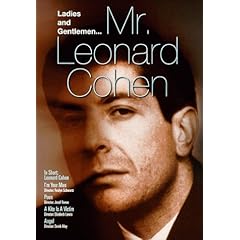
Ladies And Gentlemen, Mr. Leonard Cohen...

This guy is something else. Kim and I watched this gem of a film last night. What an inspiration! Cohen truly is a genius, a man that will be talked about long after we're all gone. He makes me want to wear a beret and wax poetic about everything I see around me.....and that's saying something!

Let me start out by saying that it is my hope to make movie and album reviews a regular part of Ramblin Round Managua. You see, I'm adding a little structure to this place, tidying up a bit. Every once in a while, one's mind could use a little order I suppose. It should be no different with the articulated thought process, placed upon the electrically clicking display pad that grants a journey within one's mind. So, with that said, here goes....

Leonard Cohen...circa 1965. Canada's public broadcasting channel aired a documentary, chronicling the life and, more important, the 'lifestyle' of its up-and-coming poet. As of the filming of this short black and white film, Cohen had yet to pick up a guitar and put his words to music. He was, first and foremost, a McGill University educated poet, a well-to-do Montreal jew, exploring the boundaries of society through the expanded parameters afforded by his lineage. Given the luxury of financial security and grounded social status, Cohen embarks on a life of bohemian discovery, perusing the dark underbelly of Montreal's streets and the caste of high society, effortlessly and without pretense. He is a child, being reborn every day, asking fundamental questions, discovering the world through an unorthadox lens. Getting a haircut is an adventure, a philosophical endeavor.

In a theme that still rings true to this day, he seeks to preserve the 'self' in an increasingly monolithic, capitalistic Western world. Before the hypocrisy and demise of the youth movement of the 60s became apparent, Cohen illustrates, through his lifestyle, that the preservation of the 'self' is indeed possible. Using the I Ching as his guide, he journeys to Hydra, a remote Greek isle, lacking electricity, cars, and other accoutrements of modernity. There, he observes the world around him, toggling between two worlds, like a poet should I suppose.

Interestingly, two films come to mind immediately when comparing the early life of Mr. Cohen; The Graduate and Don't Look Back. The latter has obvious similarities. In a sense, Dylan's 1965 documentary, 'Don't Look Back' is the American 'answer' to Canada's 'Ladies and Gentlemen, Mr Leonard Cohen'....they are North American bookends throughout the latter half of the twentieth century. In 1965, both are at a crossroads. Cohen with his departure from poetry and into a life of song, and Dylan with his transformation into a rock star, eschewing the role of poet and spokesperson for a generation. Both begin to look inward, exploring the dark realm of 'self' through their music. As for 'The Graduate', well.....the similarities are more superficial. Cohen just kind of looks like Dustin Hoffman's 'Benjamin'. He carries himself the same way, has a waifish, awkward look of an early twentysomething recent graduate. However, Cohen exudes a certain confidence that Hoffman's character only realizes in the last 10 minutes of his film.

In all, I highly recommend this film to anyone that in interested in bohemian lifestyles, poets, the counterculture before it was undermined and debased. Cohen personified everything that was good about the new left in North America. Apolitical now, he was then a leader, a person to be trusted, when during the heady times of the 1960s. I trust he'll be remembered that way as well, through his music and writing. I give this film 5 RR points out of 5. Good day to you all...